John Titor: The Visitor from 2036
John Titor, a self-proclaimed time traveler from 2036, left bizarre schematics and failed predictions in 2000. What is the truth?
Author Harry
Read 3 Min
Published
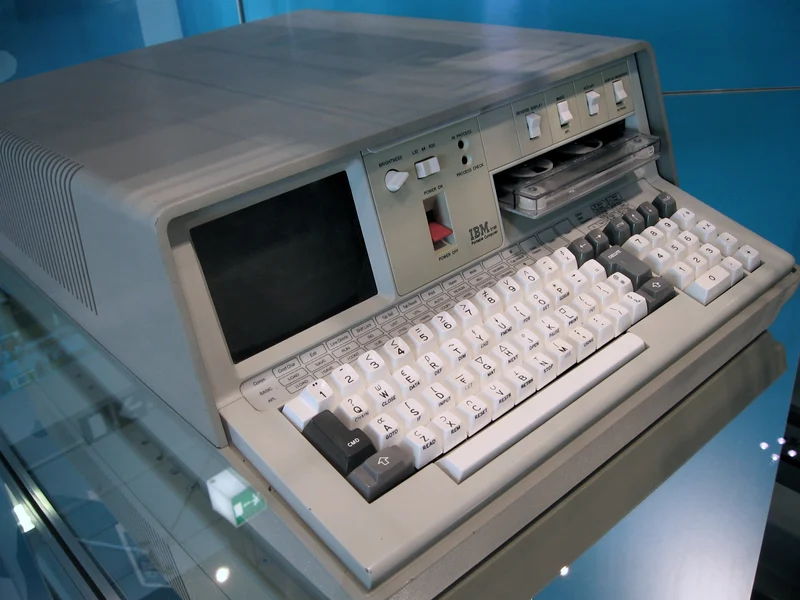
The IBM 5100 computer sought by John Titor. Photo by Marcin Wichary. CC BY 2.0
The Internet’s Time Traveler
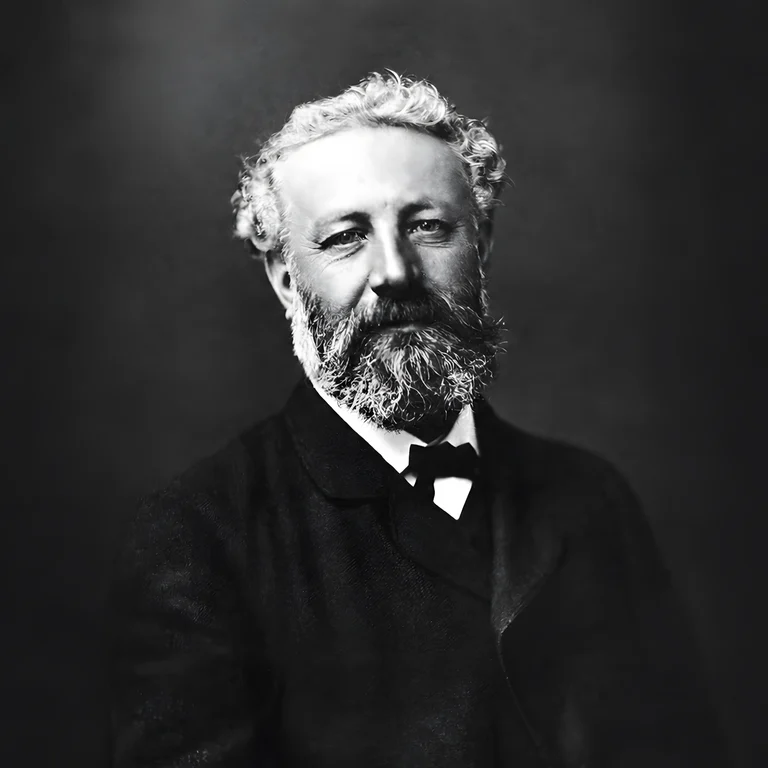
On November 2, 2000, a peculiar post appeared on a quiet online board called the Time Travel Institute. The author identified himself as John Titor. He calmly stated that he was a military time traveler dispatched from the year 2036. It was a moment when the end-of-the-century fervor and the residual anxiety of Y2K had not yet dissipated. Most dismissed him as a typical internet eccentric. However, the atmosphere of the forum shifted once he began uploading detailed schematics and manuals of his machine.
The Purpose of His Arrival
Titor’s mission was clear: travel back to 1975 to secure an IBM 5100 computer. He explained that a hidden debugging feature in the machine was vital to resolve a critical Unix system bug scheduled to trigger in 2038. After completing his mission, he made a temporary stop in 2000 for personal reasons before returning to his time. For approximately four months, he conversed with netizens, leaving behind an extensive archive on future politics, society, and technology. On March 24, 2001, he left a final message announcing his scheduled return, and vanished entirely from the digital world.
Bring a gas can with you when the car dies on the side of the road.
The Hidden Function of the IBM 5100
What lent Titor both the greatest controversy and the highest credibility was his assertion regarding the IBM 5100. He claimed this early portable computer possessed a hidden function capable of translating both APL and BASIC code and emulating older mainframes. At the time, this detail remained virtually unknown to the general public and most computer scientists.
Years later, this claim proved true. Key IBM engineers involved in the original project admitted they had intentionally omitted and concealed the feature from manuals to prevent reverse engineering by competitors. Supporters argue that a common netizen in 2000 could not have known a corporate secret from the 1970s. For them, this remains the strongest evidence of his identity as a temporal operative. Skeptics counter that Titor was simply a former IBM employee or an insider with advanced knowledge of retrocomputing.
The Unfought Civil War and World War
Many of Titor’s major predictions never materialized. He warned that severe political division in the United States would erupt into a civil war beginning in 2004, culminating in a Russian nuclear strike and World War III in 2015. In our documented history, these catastrophes did not occur.
Interpretations of these discrepancies remain sharply divided. Skeptics view the failed prophecies as definitive proof of a hoax, equating Titor to any other failed doomsday prophet. Believers, however, point to the many-worlds interpretation of quantum mechanics that Titor himself referenced. He noted that his timeline differed from ours by one to two percent, and argued that the future began to diverge the moment he arrived and shared information. His defenders note that fragments of his predictions, such as extreme political polarization, continue to manifest in different forms today.
The Mechanics of Time Travel and Particle Physics
Titor shared photographs and technical details of his C204 Gravity Distortion Time Displacement Unit. He explained that the device operated using micro-singularities, predicting that CERN would soon make foundational discoveries in particle physics related to this technology.
Only months after his departure, in late 2001, CERN released statements regarding the theoretical possibility of producing micro-black holes during future experiments at the Large Hadron Collider. Advocates were thrilled that an anonymous poster had predicted both the nature and timing of CERN’s research. Skeptics remain unimpressed. They argue that concepts like rotating black holes and time dilation were already accessible in popular science and academic journals prior to 2000. They dismiss his schematics as sophisticated science fiction, blending existing particle physics with elaborate mechanical design.
Whose Timeline Do We Stand On?
More than two decades have passed since Titor left the internet. The nuclear firestorms he predicted did not consume 2015, and the year 2038 approaches in silence. Perhaps it was a meticulously crafted hoax orchestrated by a brilliant eccentric. Or perhaps his presence and warning triggered a butterfly effect, steering us away from a catastrophic end. The truth remains unverified, preserved in the decaying archives of cyberspace. Behind the headlines of our daily news, one is left to wonder if someone is still quietly altering the trajectory of our world.
That the prophecy failed is not proof that he never arrived.
Source
Share