Bob Lazar's Disclosure: Fragments of a Nonexistent Man
In 1989, Bob Lazar claimed to have reverse-engineered extraterrestrial craft at "S-4," a facility near Area 51. Are the fragments he provided a profound disclosure, or an intricate fabrication?
Author Harry
Read 4 Min
Published
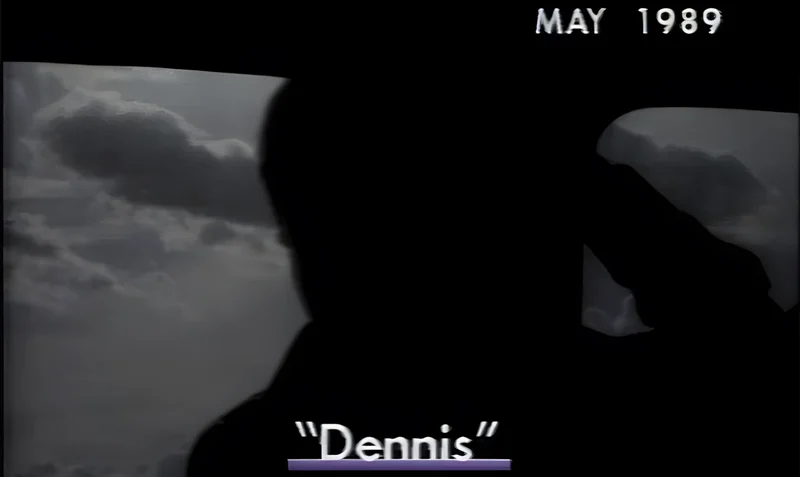
Bob Lazar’s first obscured interview in 1989.
The Testimony
May 1989. A local news broadcast in Las Vegas. A man sits before the camera, his face obscured by heavy shadow. He goes by the pseudonym "Dennis." His voice is digitally altered. The few words he speaks mark the prelude to a decades-long mystery.
The U.S. government is reverse-engineering alien spacecraft.
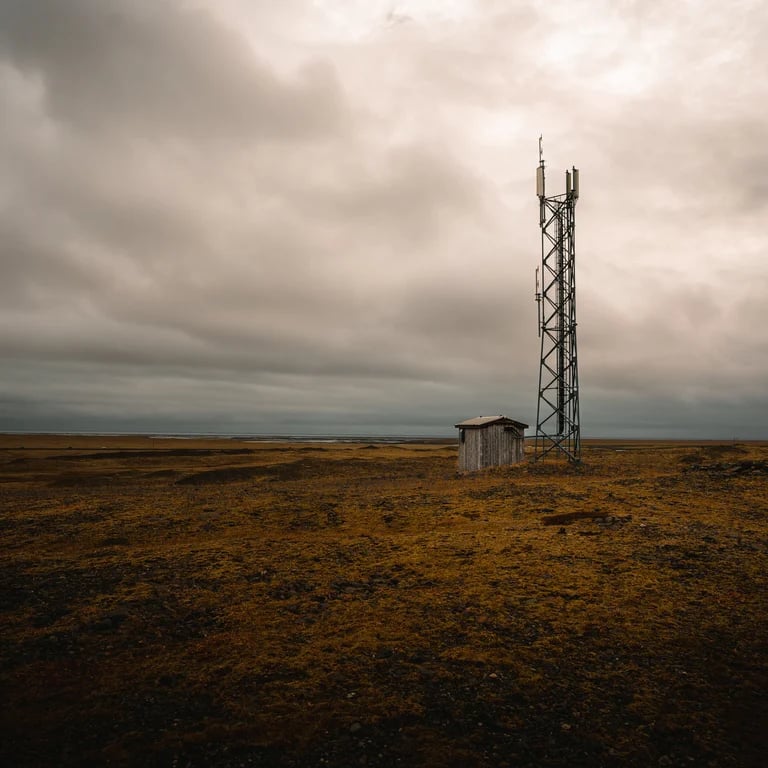
The location: the heart of the Nevada desert. A sector whose very existence was officially denied. The world would later know it as Area 51.
The Unmapped Territory: Area 51
A top-secret military installation near Groom Lake, Nevada, designated as Area 51. The U.S. government only formally acknowledged its existence in 2013 through declassified documents. Officially, it is a military facility for test-flying cutting-edge reconnaissance aircraft like the U-2 and the SR-71 Blackbird. The documents contain zero references to extraterrestrials or unidentified flying objects. Absolute restriction and silence. That is the entirety of Area 51 permitted to the public and the press.
Erased History, Lingering Traces
An anomaly exists. It lies in the sequence of events immediately following the unmasking of Dennis as Bob Lazar. The moment he exposed his work at S-4, a covert facility concealed in the mountains south of Area 51, his past began to vaporize. Degrees from MIT and Caltech vanished. Employment records as a physicist at the Los Alamos National Laboratory were wiped clean. The government dismissed him as a compulsive liar and a fraud.
Here, the boundary of fact blurs. There is no way to prove whether an authority physically eradicated his records or if the credentials never existed in the first place. Yet, contradictions persist. An outdated internal directory from Los Alamos clearly lists Robert Lazar. A local newspaper clipping survives as a fragment, featuring an interview that introduces him as a laboratory physicist. Is he a con artist with fabricated credentials, or a whistleblower erased by the system?
The clumsy lie of a fraud, or the fragments of an erased man. The scales of truth refuse to tip.
Three Claims
Lazar’s assertions transcend mere eyewitness accounts. He detailed the anatomy of the craft he dismantled and the interior of the facility using precise, scientific nomenclature. The three trajectories he left behind remain at the epicenter of a fierce debate over the truth.
Element 115
Lazar identified the craft's power source as an unknown heavy metal: "Element 115." In 1989, this element did not exist on the periodic table. It was not until 2003, fourteen years later, that a joint Russian-American research team successfully synthesized Element 115 using a particle accelerator. It then received its official designation in 2016: Moscovium. How did Lazar speak of a nonexistent element fourteen years ahead of its time?
However, categorizing this as pure foresight is problematic. Long before 1989, the "Island of Stability" theory—suggesting the existence of stable transuranic elements near atomic numbers 114 or 115—already permeated the physics community. Furthermore, Lazar claimed this element maintained a stable state to generate anti-gravity. The synthesized Moscovium, in reality, proved highly unstable, decaying in a fraction of a second. Did he witness a truth modern science has yet to reach, or did he shrewdly borrow contemporary physics theories into his narrative?
Gravity Amplification and Spacetime Distortion
He stated the craft did not burn fossil fuels. Instead, it utilized three amplifiers mounted on its base to distort gravity, folding spacetime for propulsion. At the time, this was dismissed as science fiction. Yet in 2015, when LIGO researchers directly detected gravitational waves, his account resurfaced.
Naturally, the concept of gravity warping spacetime via Einstein’s theory of general relativity was already public knowledge. Lazar’s description might be the brilliant insight of a man anticipating the era of gravitational waves. Conversely, it is entirely plausible that a highly intelligent individual simply fused relativistic concepts with plausible sci-fi imagination.
The Bone-Reading Scanner
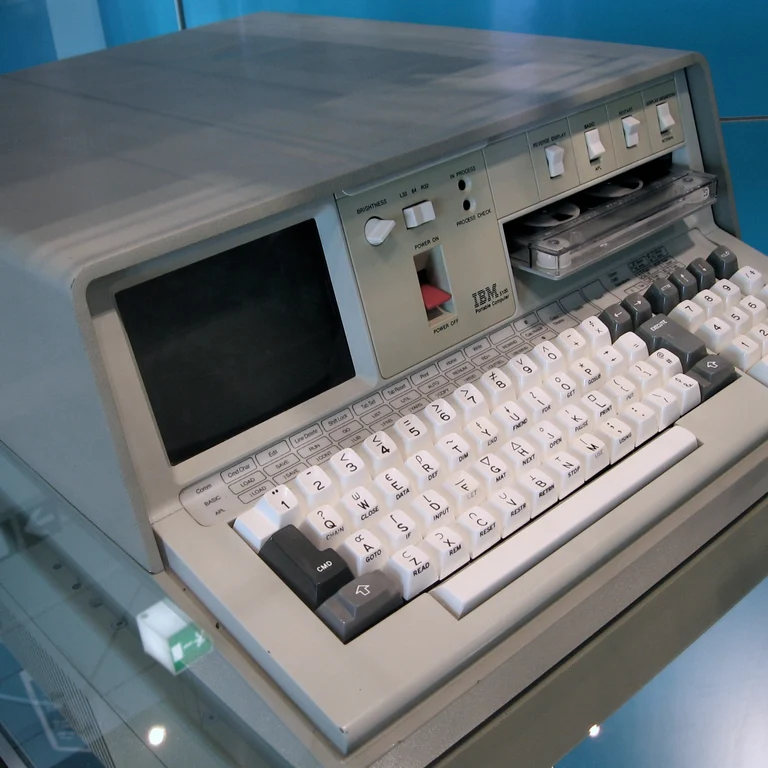
Describing the internal security protocols of S-4, Lazar recounted a biometric device: one placed a hand on a panel, and it verified identity by measuring the length of the bones beneath the skin. Later declassified materials confirmed the existence of a similar device used in the 1980s, the Identimat 2000. It bore a striking resemblance to his description.
Yet, this too fails as absolute proof of an insider. The Identimat 2000 was already operational in other high-security military installations and restricted zones beyond Area 51. It was neither nonexistent alien technology nor top-secret hardware. Did he see the actual interior of S-4, or did he cleverly weave existing technology into his lore?
The Truth Beneath the Sand
Bob Lazar handed us a massive puzzle. The pieces appear to interlock perfectly, yet under a magnifying glass, hairline fractures emerge. Is he a solitary whistleblower speaking the truth, or a fraud weaponizing knowledge to deceive the public? Perhaps he was merely a pawn, deployed to divert eyes elsewhere. The judgment now rests with the individual. All questions remain buried beneath the cold desert sands of Nevada.
In a nonexistent facility, a nonexistent man studied a nonexistent metal.
Source
Wikipedia Article Related to Bob Lazar
Share