The Chronovisor: The Vatican’s Hidden Window to the Past
The Chronovisor, a rumored time-peering device in the Vatican archives, blends myth and belief. We deconstruct its architecture.
Author Harry
Read 3 Min
Published
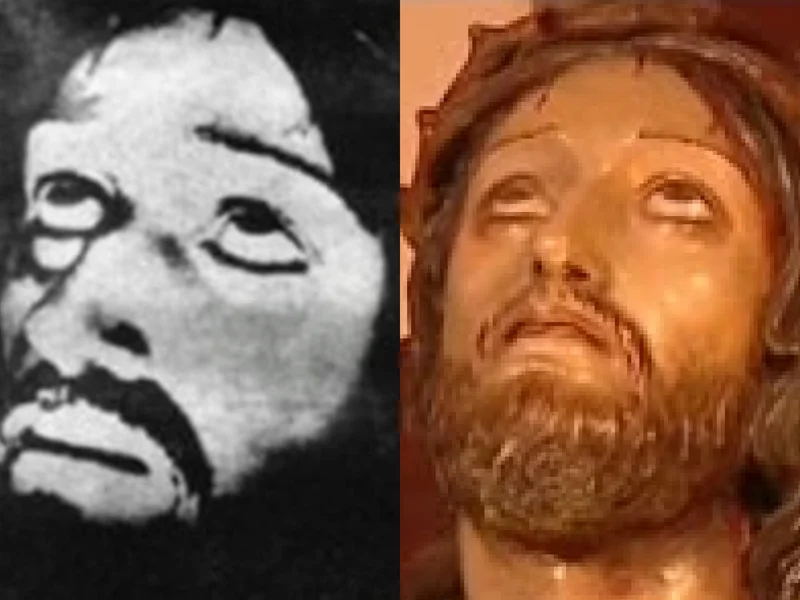
Comparison of the Chronovisor Jesus photo and the Collevalenza crucifix statue
Replaying Lost Time
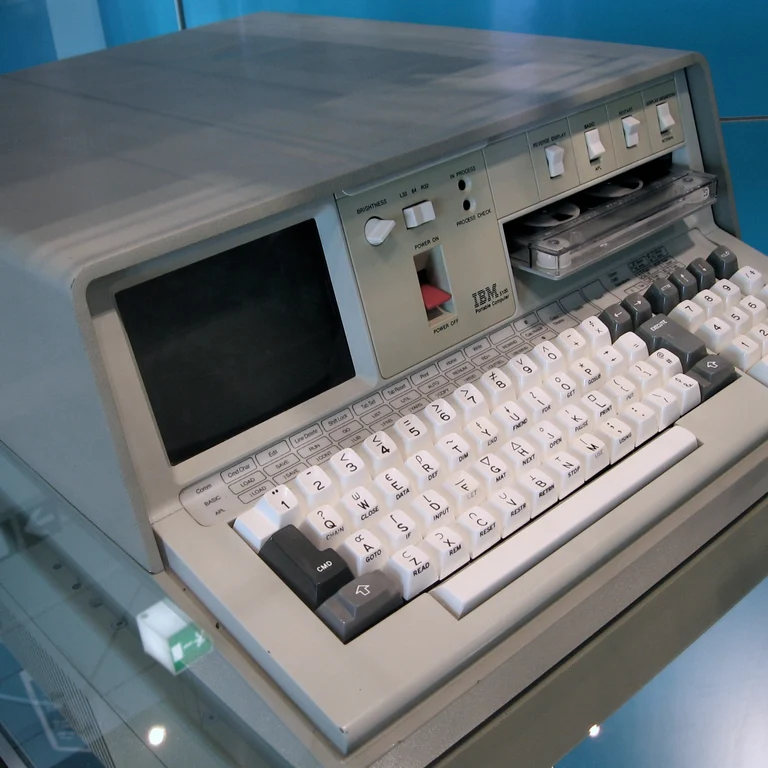
In a darkened room, a cathode-ray tube screen glows. It displays Golgotha two thousand years ago. Jesus hangs on the cross, gasping for air, while Roman soldiers stand nearby. A turn of the dial transports the viewer to a Roman amphitheater in 169 BC, where a lost tragedy plays in the author's own voice. What if time travel required no physical displacement, but merely captured residual light and sound to display them like a television broadcast? This premise forms the core of the Chronovisor conspiracy that captivated the late twentieth century.
We long to watch history, not merely record it.
The Disclosure of Father Ernetti
In 1972, an Italian weekly magazine introduced the Chronovisor to the world. At the center of the story stood Father Pellegrino Ernetti, a Benedictine monk, musicologist, and physicist based in Venice. Ernetti claimed that every past event leaves an energetic footprint. By tuning into specific frequencies, one could translate this residual energy into audio and visual data. He claimed to have built the device with help from leading minds, including Nobel laureate Enrico Fermi and rocket scientist Wernher von Braun. The public listened. The combination of Vatican secrecy and scientific authority gave the narrative immediate traction.
The Image on the Cross
Ernetti supported his claim with a single photograph. It showed the blurred face of Christ suffering on the cross. Ernetti claimed this was a direct capture from the Chronovisor. The evidence quickly collapsed.
Art historians traced the image to a sanctuary in Collevalenza, Italy. The photograph matched a wooden crucifix sculpted by Spanish artist Lorenzo Coullaut Valera. Someone had reversed the image, blurred the resolution, and presented the sculpture as a historical photograph. The physical proof was a crude manipulation.
Quintus Ennius and Modern Latin
The second piece of evidence involved the lost tragedy Thyestes, written by the second-century BC Roman poet Quintus Ennius. Only fragments of the play survived antiquity. Ernetti claimed he used the Chronovisor to watch the play's performance in 169 BC and transcribed the text in its entirety.
Linguists and classicists examined the transcription. The text fell apart under scrutiny. The Latin contained words and grammatical structures that did not exist in the second century BC. Some terms belonged to late Latin, developed centuries later. The syntax mirrored mistakes typical of a modern Italian speaker writing in Latin. The text was not a transmission from antiquity but a modern composition written by an amateur.
The Distorted Decree
Supporters of the Chronovisor point to a 1988 Vatican decree. The decree declared automatic excommunication for anyone using technical instruments to record or publish certain events. Believers argued this was the Vatican silencing the Chronovisor.
The argument relies on selective reading. The 1988 decree from the Congregation for the Doctrine of the Faith addressed the confidentiality of the confessional. With the rise of portable recording technology, the Church sought to protect private confessions between priests and penitents. It did not ban time travel. Conspiracy theorists stripped the text of its context to invent an official cover-up.
The Persistence of Myth
The Chronovisor remains a product of twentieth-century media and pseudoscience. Under scholarly analysis, the evidence dissolves: a manipulated photograph of a statue, an anachronistic Latin text, and a misconstrued ecclesiastical decree.
Yet the belief persists that a device capable of viewing history sits in the Vatican archives. Perhaps the fascination lies not in the machine itself, but in the human desire to construct a preferred reality. Faced with clear evidence of fabrication, some still listen for the faint hum of the machine in the dark.
The truest mirror of the past is not a machine, but human credulity.
Share