The Key of Solomon: A Manual of Desire
Emerging in the 14th century, the Key of Solomon grimoire details techniques for controlling spirits, evolving from medieval superstition to modern ritual.
Author Harry
Read 3 Min
Published
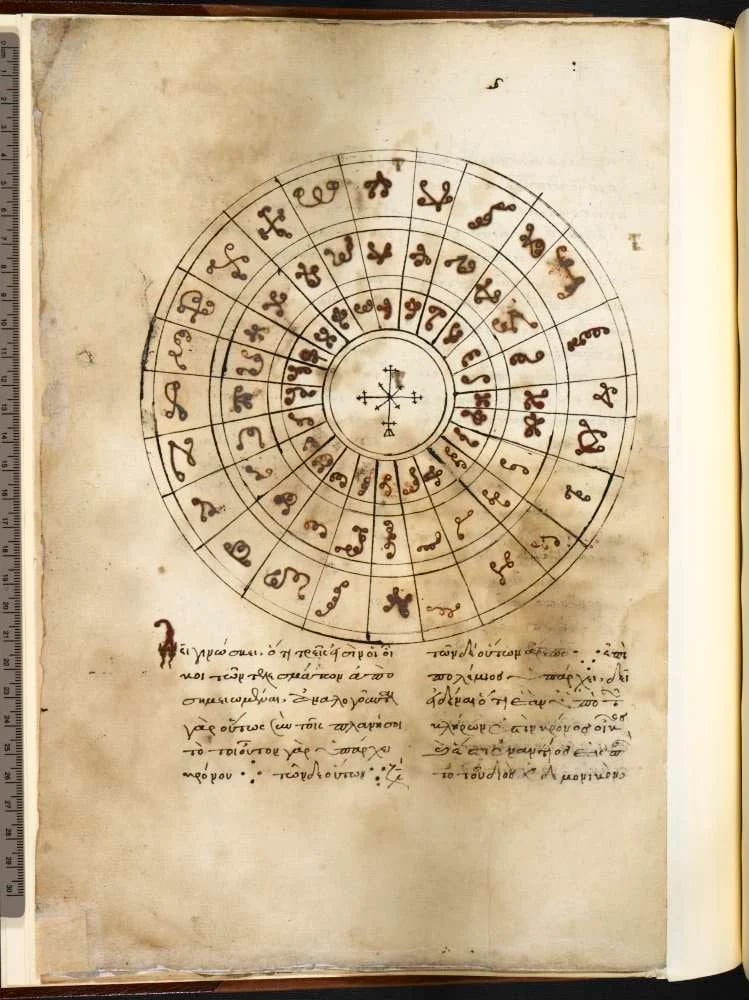
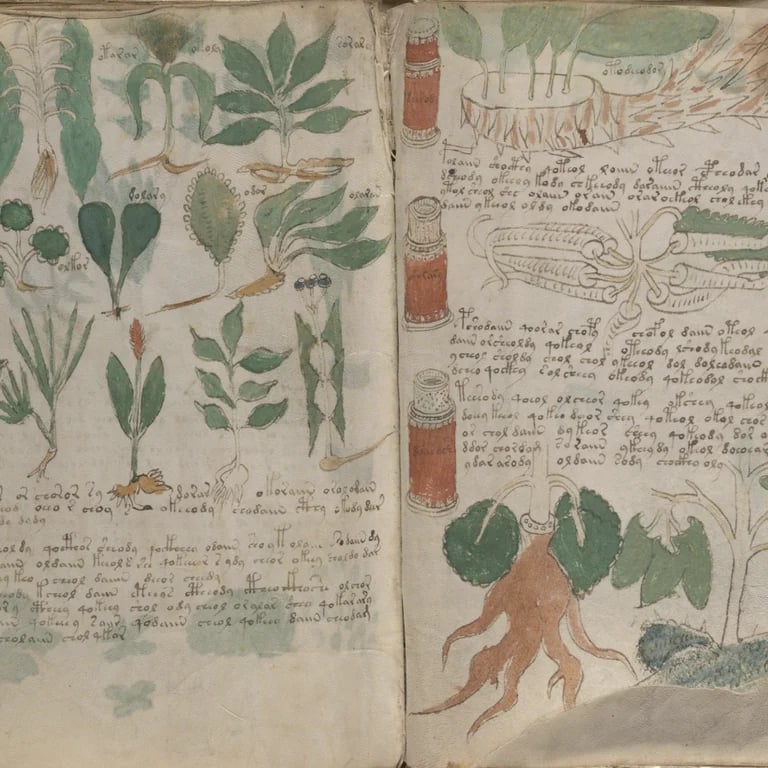
Magical diagram from the Harley MS 5596 manuscript. Photo by British Library
Calculated Reason
A precise chalk circle is drawn on a windowless basement floor. Hebrew characters line the perimeter at exact intervals. At the center, a figure holds a parchment of symbols, reciting Latin incantations timed to specific planetary hours.
While this resembles a scene from horror cinema, it is a contemporary reality. In an era dominated by rational technology, some still study these ancient texts, adhering strictly to every syllable. At the center of this practice lies the Key of Solomon.
Known officially as the Clavicula Salomonis, the text claims to be King Solomon’s instructions to his son Rehoboam on commanding angels and demons. Philological evidence, however, dates the manuscript to the fourteenth or fifteenth century, arising during the European Renaissance. It is a synthesis of Jewish Kabbalah, Christian mysticism, and Arabic astrology. Rather than a collection of prayers, it operates as a magical algorithm, demanding precise execution to yield results.
To control a demon, one must first control every minor error. This is not prayer; it is a transaction.
Rules and Taboos
The Key of Solomon distinguishes itself through obsessive precision. It outlines the preparation for summoning entities with the rigor of a laboratory manual. The practitioner must fast, isolate, and purify the body through ritual bathing. Instruments, including knives and wands, must be forged from specific materials on designated days to possess efficacy.
Planetary alignment dictating the hour is absolute. One does not summon a spirit of love during the hour of Saturn, nor a spirit of destruction under Venus. The text warns that a minor deviation, such as using ordinary water instead of holy water, or a mispronounced syllable, does not merely result in failure. It invites catastrophe. Despite dealing with the supernatural, the process remains highly rationalized. The practitioner acts not as a supplicant, but as an operator executing a precise formula.
Pentacles and Celestial Force
At the core of the text are pentacles, talismans designed to channel planetary energies. The manuscript catalog entries correspond to Saturn, Jupiter, Mars, the Sun, Venus, Mercury, and the Moon. Each design consists of geometric lines, angelic names, and biblical verses.
The stated purposes of these pentacles expose raw medieval desires. They promise to locate buried treasure, compel love, inflict disease upon enemies, or grant invisibility. Though utilizing sacred names, the objectives remain entirely secular and self-serving. The manuscript stands as historical evidence of human contradiction, using the divine to secure the material.
Modern Practitioners
In the modern era, the Key of Solomon has spread widely through digital networks. Following its systematization and English translation by nineteenth-century occult societies like the Hermetic Order of the Golden Dawn, the text became accessible beyond elite circles. Today, online forums host discussions on pronunciation and modern substitutes for ritual tools, using high-grade paper for parchment and synthetic alternatives for animal hides, while preserving the structural core of the rituals.
Modern practitioners interpret these practices through dual lenses. Some maintain a literal belief in the entities, conducting strict evocations. Others adopt Carl Jung's analytical psychology, viewing angels and demons as archetypes of the human unconscious. For them, the ritual does not summon external forces, but stimulates and regulates the subconscious, serving as a form of psychological therapy or deep meditation. The medieval grimoire has evolved into a tool for self-exploration.
The Target of the Summons
The Key of Solomon is not mere superstition. It is a mirror reflecting the human impulse to control unseen forces to compensate for inherent limitations. The medieval practitioner tracing planetary paths and the modern individual seeking agency through digital interfaces share the same fundamental drive.
Whether these incantations evoke actual entities or merely unlock the subconscious remains unresolved. Yet, as long as these pages are turned, the human experiment to master the invisible continues.
The lock is opened not by the key, but by the desire for what lies beyond the door. Which door do you stand before?
Share