Somaliland: The State Absent from the Map
A stable East African democracy with every element of statehood, Somaliland remains erased from global maps. Explore the cold logic behind its exclusion.
Author Harry
Read 4 Min
Published
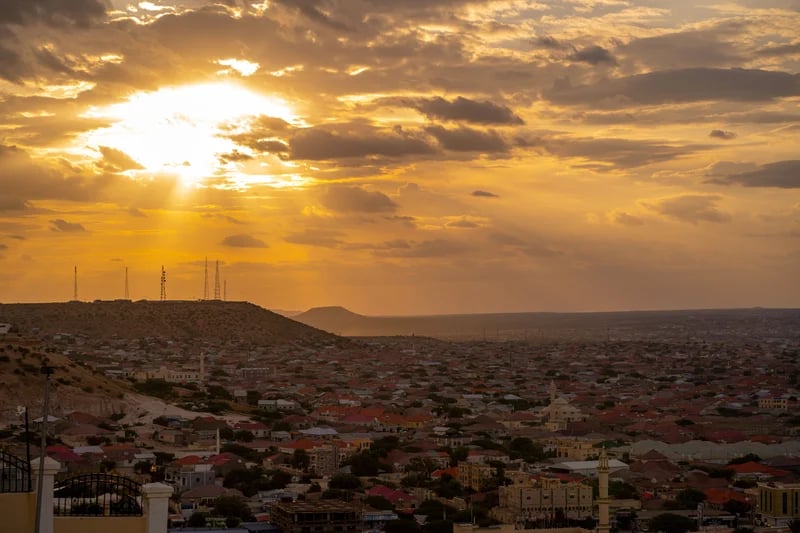
Panoramic view of Hargeisa, the capital of Somaliland. Photo by Abdulkadir Hiraabe
The Ghost Land Where Gunfire Ceased
The Horn of Africa has long existed in the global consciousness as a lawless haven for piracy. In Mogadishu, Somalia’s capital, warlord rivalries and extremist terror define the landscape. Gunfire serves as a daily soundtrack. The central government controls little beyond a few capital blocks, leaving millions displaced. This ruin is the only face of Somalia the world recognizes. Yet, crossing the northern border into the former British Somaliland reveals a starkly different reality.
At the border, the gunfire stops. Order begins. Traffic lights function. Unarmed police officers direct cars. Bustling markets fill the streets, children walk to school in uniform, and the night is safe. Though technically within Somalia's borders, this territory operates in complete isolation from the chaos of the south. This is Somaliland, a ghost state omitted from every official world map.
Sovereignty Formed in the Ashes
In 1991, as the Somali central government collapsed into anarchy, Somaliland declared independence. The territory ended its civil conflict internally, without foreign peacekeepers or international intervention. Clan elders gathered under trees for months, using traditional mediation to disarm militias and share power. Since then, its trajectory has remained remarkably orderly compared to the continental norm. Somaliland established its own currency, the Somaliland shilling, and developed a biometric passport system to secure its borders.
Its political stability is particularly striking. Since 2003, Somaliland has held regular, transparent presidential elections, free from the autocracy common in the region. When an opposition candidate once won by a margin of mere dozens of votes, the incumbent accepted the court ruling and conceded power. According to Freedom House, Somaliland’s political rights and civil liberties scores surpass those of many recognized sovereign states in Africa. Built purely on local taxation and domestic resolve, this entity functions with clear administrative capacity.
The Ignorance Bred by Stability
Yet beneath these metrics lies a stark contradiction. For over thirty years, not a single nation has officially recognized this stable, functioning territory as a sovereign state. The United Nations maintains silence. The African Union looks away. Western powers, citing geopolitical alignment, mechanically treat Somaliland as part of Somalia. This systematic denial forces the enclave into isolation. Its citizens cannot travel freely, international mail cannot be delivered directly, and access to global financial institutions like the World Bank remains blocked.
Somaliland achieved security and governance independently in one of the most volatile regions on earth. While billions in international aid failed to stabilize Somalia proper, Somaliland quietly succeeded on its own. Yet the global community rejects its independence, keeping the territory behind invisible barriers. Why does a fully functional state remain a ghost in the international system?
The Cold Fear of Redrawn Borders
The explanation lies in a cold, bureaucratic fear entirely removed from values like democracy or human rights. It is the dread of a geopolitical chain reaction. Africa’s contemporary borders are arbitrary lines drawn by colonial empires, completely ignoring indigenous cultures, languages, and geographies. To prevent endless conflict, the preservation of these colonial boundaries became an unwritten rule of continental diplomacy.
Recognizing Somaliland would shatter this consensus. Dozens of separatist movements across Africa would seize on the precedent. From Biafra in Nigeria to Ambazonia in Cameroon, dormant nationalist demands would resurface. A single alteration of a border could trigger widespread territorial disputes and civil conflicts.
Consequently, the international community chooses to bind this functional democracy to a failed state. Preserving the continental status quo takes precedence over recognizing local success. This is the cold logic of geopolitics.
The Rules of a Contradictory World
Recently, a small crack appeared in this wall of silence. On December 26, 2025, Israel announced its official recognition of Somaliland as an independent state. On the geopolitical chessboard of the Red Sea and the Gulf of Aden, Israel sought a strategic partner to secure maritime routes and counter regional adversaries. Though driven by self-interest, this decision marked the first major disruption to Somaliland's decades of isolation. Yet, with Western powers and the African Union maintaining their silence or opposition, Somaliland's ultimate status remains uncertain.
This paradox invites a fundamental question: what constitutes a state? Political science defines a state through three elements: defined territory, a permanent population, and sovereignty. Somaliland controls its borders, hosts a population with a shared identity, and maintains a democratically elected government. By any academic standard, it functions as a state. Paradoxically, the global order itself actively denies this reality. Present yet invisible, Somaliland remains an unsettling anomaly of modern diplomacy.
What defines a nation is not the will of the people living within, but the cold consent of those looking from the outside.
Source
Somaliland: The Horn of Africa’s Breakaway State
Israel recognises Somaliland as independent state, Netanyahu says
Share